

 Double Glazing
 Mirror
 Laminated
 Monolithic
 Silk-screen printing
 Tempering
 Extrual Aluminum
 PVC Kömmerling
 Glass Enclosures
 Bioclimatic Pergola
 Fixed Ceilings
 Movable Roofs

 Bath Screens
 Furniture and Bath
 Bathroom Mirrors
 Shower Trays
 Aluminum Moldings
 Ayous moldings
 Beech moldings
 Obeche moldings
 Pine Mouldings
 Oak Moldings
 Other Moldings
 Accessories
 Antifog
 Handrails
 Reinforcing Bars and Clamps
 Hinges
 Locks and Latches
 Door closers
 Hardware
 Tools and Consumables
 Marquees
 Profiling
 Sliding Doors
 Glass Facade Systems
 Supports
 Handles and Knobs
Complete guide to glass types: which one to choose for each project


Introducción al mundo del vidrio
Choosing the right type of glass for your project is essential to ensure safety, aesthetics, and functionality. In Altea Glassware, with more than 35 years of experience, we help you understand the differences between the different types of glass available on the market.
Vidrio Incoloro o Float
The vidrio incoloro, also known as float glass, is the most common and versatile type of glass. It is manufactured by the float process on molten tin, which gives it perfectly flat surfaces and great transparency.
Características principales:
- Espesores disponibles: desde 2mm hasta 19mm
- Transmisión lumínica: superior al 90%
- Applications: ventanas, puertas, estanterías, mesas, espejos
¿Cuándo elegirlo?
Ideal for applications where maximum visibility and natural light are required. It is the basis for creating other types of glass such as tempered or laminated.
Vidrio Extraclaro (Bajo en Hierro)
The vidrio extraclaro is a premium version of float glass with a reduced content of iron oxides. This eliminates the characteristic greenish tone of normal glass, offering crystal clear transparency.
Ventajas del vidrio extraclaro:
- Transparencia máxima sin tonalidad verdosa
- Mejor reproducción del color en expositores
- Ideal para mobiliario de diseño
- Perfecto para acuarios de alta gama
Vidrio Templado (de Seguridad)
The vidrio templado undergoes a heat treatment that increases its resistance up to 5 times more than normal glass. In case of breakage, it fragments into small, non-cutting pieces.
Aplicaciones obligatorias del vidrio templado:
- Mamparas de baño y ducha
- Barandillas y escaleras
- Puertas de cristal
- Glass tables
- Cerramientos de terraza
Importante: El vidrio templado no se puede cortar ni modificar después del proceso de templado. Debe fabricarse a medida.
Vidrio Laminado (de Seguridad)
The vidrio laminado is composed of two or more sheets of glass joined by a sheet of butyral (PVB) or resin. In case of breakage, the fragments remain attached to the intermediate sheet.
Most common compositions:
- 4+4: Dos vidrios de 4mm (total 8mm aproximadamente)
- 6+6: Para barandillas y cerramientos
- 8+8: Alta resistencia para suelos y cubiertas
¿Cuándo elegir vidrio laminado?
When fall-arrest safety (railings, skylights) or protection against impacts and theft is required. It also offers excellent acoustic insulation.
Vidrio Mate o Satinado
The vidrio mate (also called frosted, satinovo or sandblasted) has one of its faces treated with acid that gives it a translucent but not transparent finish.
Usos principales:
- Puertas de paso donde se requiere privacidad
- Bathroom screens
- Separadores de ambientes
- Puertas de armarios
Vidrio con Cámara (Doble Acristalamiento)
The double glazing o glass with a chamber consists of two sheets of glass separated by a chamber of air or argon gas, hermetically sealed.
Beneficios del doble acristalamiento:
- Aislamiento térmico: Reduce pérdidas de calor hasta un 50%
- Aislamiento acústico: Reduce el ruido exterior
- Ahorro energético: Menor consumo en climatización
- Confort: Elimina el efecto de pared fría
Composiciones habituales:
- 4/12/4: Vidrio 4mm + cámara 12mm + vidrio 4mm
- 4/16/4: Mayor aislamiento térmico
- 4/12/6: Mejor aislamiento acústico
Vidrio de Control Solar
The solar control glass incorporate metallic layers that reflect part of the solar radiation, reducing interior overheating without losing luminosity.
Tipos de control solar:
- Vidrio tintado (Parsol): Gris, bronce o verde
- Vidrio reflectante: Aspecto espejo
- Vidrio bajo emisivo: Máxima eficiencia energética
Vidrio Neoceram (para Chimeneas)
The vidrio cerámico Neoceram is a special material that withstands extreme temperatures (up to 800°C) without deforming or breaking. It is the only glass suitable for fireplaces and stoves.
Tabla Resumen: ¿Qué vidrio elegir?
| Application | Tipo de Vidrio Recomendado | Thickness |
|---|---|---|
| Windows | Doble acristalamiento | 4/12/4 o 4/16/4 |
| Shower screen | Tempering | 6mm u 8mm |
| Barandilla interior | Laminated | 6+6mm |
| Glass table | Templado (preferible extraclaro) | 8mm o 10mm |
| Estantería | Incoloro o templado | 6mm o 8mm |
| Chimenea | Neoceram | 4mm o 5mm |
Asesoramiento Profesional en Cristalería Altea
At Altea Glassware since 1985 we have been advising our clients on the most suitable type of glass for each project. We carry out cortes a medida, polished and beveled edges, and we offer professional installation service in Altea, Benidorm, Calpe, Denia and the entire province of Alicante.
¿Tienes dudas sobre qué vidrio necesitas? Contacta con nosotros para un asesoramiento personalizado sin compromiso.
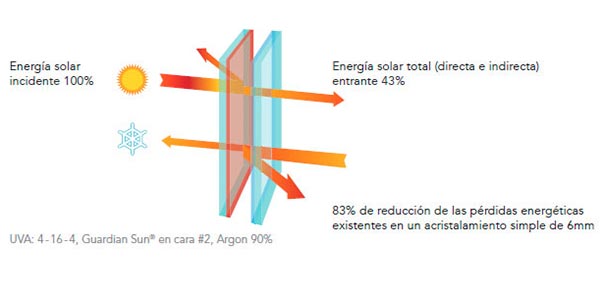

Tabla Resumen: Datos Técnicos por Tipo de Vidrio
| Type | Resistencia | Isolation | Security |
|---|---|---|---|
| Float (recocido) | 40 MPa | U=5,7 W/m²K | Sin clasificación |
| Tempering | 120-200 MPa | U=5,7 W/m²K | 1(C)1 EN 12600 |
| Laminated | 40 MPa (retiene fragmentos) | U=5,5 W/m²K | 2(B)2 EN 12600 |
| Doble cámara BE + argón | Variable | U=1,0-1,3 W/m²K | Según composición |
| Triple glazing | Variable | U=0,5-0,7 W/m²K | Según composición |
Sustainability
The flat glass industry has reduced its CO₂ emissions by 50% since 1990. High-efficiency glass (low-E, solar control) can save between 15 y 25 kg de CO₂ por m² al año compared to single glass, which over 25 years of useful life is equivalent to avoiding between 375 and 625 kg of emissions for each square meter of efficient glass installed.




Very complete and well explained guide. I am from the old school and I have always used normal glass, but I see that there are much better options. Acoustic laminate interests me for the bedroom that faces the street.
Hello Luis Muñoz, thank you for your comment. We are glad that you found the article useful. If you have any questions or projects in mind, we will be happy to help you. Best regards, Cristalería Altea.
As an interior designer, I always recommend this guide to my clients. It is clear and complete. Low-E glass is essential on the coast for energy saving.
Perfect guide for beginners! I learned a lot about the different types of glass. We plan to renovate our apartment in Benidorm, this helps a lot with the decisions.